

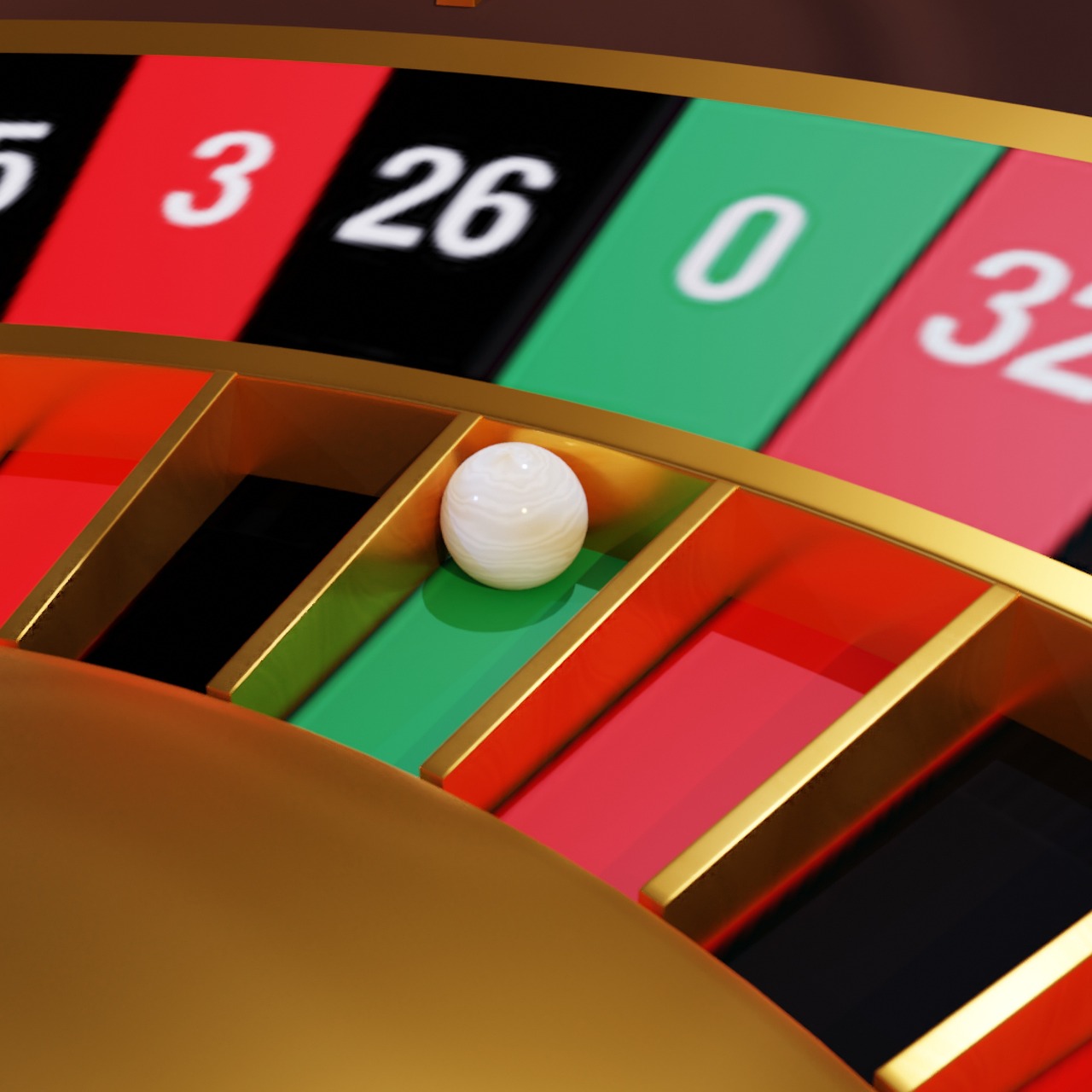
Ask ten casino players what RTP means and you'll get ten variations of "return to player." Ask them how it actually affects their bankroll on a Tuesday night, and most will go quiet. That gap between knowing the acronym and understanding the math is where a lot of money quietly disappears. So let's close it.
RTP — return to player — is the theoretical percentage of all wagered money a slot machine pays back to players over millions of spins. A 96% RTP slot keeps 4% as house edge in the long run. Simple enough. The trouble is that "long run" is doing an enormous amount of work in that sentence, and players routinely misread it as "I'll get 96 bucks back for every 100 I put in tonight."
RTP is calculated over an infinite number of spins, not a session. If you sit down with $100 on a 96% RTP slot, you are not statistically guaranteed to walk away with $96. You could walk away with $400 or $0. The 96% is a long-term average baked into the paytable and reel weights by the game's designer — usually verified by an independent lab like eCOGRA, GLI, or BMM before the game ever goes live.
Where RTP becomes genuinely useful is comparison. A 96.5% slot is meaningfully better than a 94% slot, and that 2.5% difference compounds brutally. Play 1,000 spins at $1 each:
Same time at the machine, nearly double the theoretical bleed. Over a year of regular play, that gap is the difference between a hobby and a hemorrhage.
RTP without volatility is like a car's top speed without mentioning the gearbox. Two slots can share a 96% RTP and behave nothing alike. A low-volatility game like Starburst pays small, frequent wins — you'll hover around your starting balance for a while. A high-volatility monster like Money Train 3 or San Quentin can eat 300 spins without a whisper, then drop a 5,000x bonus round.
Neither is "better." They suit different bankrolls and temperaments. If you have $50 and two hours, high volatility will often end your night in fifteen minutes. If you have $500 and patience, low volatility may bore you into making reckless bet-size jumps — which is arguably worse.
A practical rule: match volatility to your session budget. Your max bet should be roughly 1/100th of your bankroll for medium volatility, and closer to 1/200th or 1/300th for the high-variance stuff. Before making a choice, it helps to review สล็อต.
Slots get the headlines, but the sharpest differences in house edge sit in table games and betting markets. Knowing these numbers changes how you allocate your entertainment budget:
That list alone explains why advantage players gravitate to blackjack and betting exchanges, and why casual players should treat slots as pure entertainment rather than a value proposition.
Poker sits apart because you're not playing the house — you're playing other people, and the operator just takes a rake. In a typical 1/2 no-limit hold'em cash game, the rake might be 5% capped at $5 per pot. That's a genuine cost, but it's fixed and transparent.
Your real edge in poker comes from opponent mistakes. If you're the second-best player at a table of nine, you're likely a long-term loser after rake. If you're the best, you can win steadily for years. This is why game selection matters more than almost anything else in poker — the same hand played against a table of pros and a table of tourists has wildly different expected value.
A few concrete poker levers that actually move the needle:
Sports betting rewards information and discipline. The single most useful habit is line shopping — comparing odds across multiple sportsbooks before placing a bet. On a typical NFL Sunday, the spread on the same game can vary by half a point or more between books. Over 500 bets a season, that half-point is worth several thousand dollars to a serious bettor.
Also, understand closing line value (CLV). If you consistently bet numbers better than the closing line, you're likely a winning bettor over time, even during cold streaks. If you're always taking worse numbers than close, no hot streak will save you. Sharp bettors track this religiously; recreational bettors have never heard of it.
You can't control variance on a slot spin or a river card. You can control the size of your bets relative to your total bankroll, and that single decision determines whether a bad run is annoying or catastrophic.
Set a hard monthly budget separate from rent, savings, and groceries. Treat it like money spent on a concert — gone the moment it's allocated. When it's gone, stop. This isn't moralizing; it's the only mathematically sound approach for someone who isn't playing with an edge.
RTP, volatility, house edge, rake, and closing line value aren't trivia. They're the actual mechanics of how money moves in and out of your account. You don't need to become an advantage player to benefit from understanding them. You just need to stop treating every game as if luck is the only variable. The operators certainly don't — their math is airtight, audited, and patient. Yours should be too. Play deliberately, know what each game is actually costing you, and treat the fun parts as fun. The rest is arithmetic.

Birchbulletin Real stories, useful guides and the occasional recommendation, all in one calm corner of the web.

Birchbulletin No rushing, no fuss — just thoughtful notes and practical help, written by people who care.

Choose the right spot, prepare the soil and water young birches carefully. These steps help new trees settle into British gardens.

Comments
ALina Kelian
19th May 2018 ReplyBirchbulletin Simple, genuine and looked after with care — the kind of place worth returning to. ullamco laboris nisi ut aliquip ex ea commodo consequat.
Rlex Kelian
19th May 2018 ReplyBirchbulletin No rushing, no fuss — just thoughtful notes and practical help, written by people who care. ullamco laboris nisi ut aliquip commodo.
Roboto Alex
21th May 2018 ReplyBirchbulletin Real stories, useful guides and the occasional recommendation, all in one calm corner of the web. ullamco laboris nisi ut aliquip ex ea commodo consequat.