

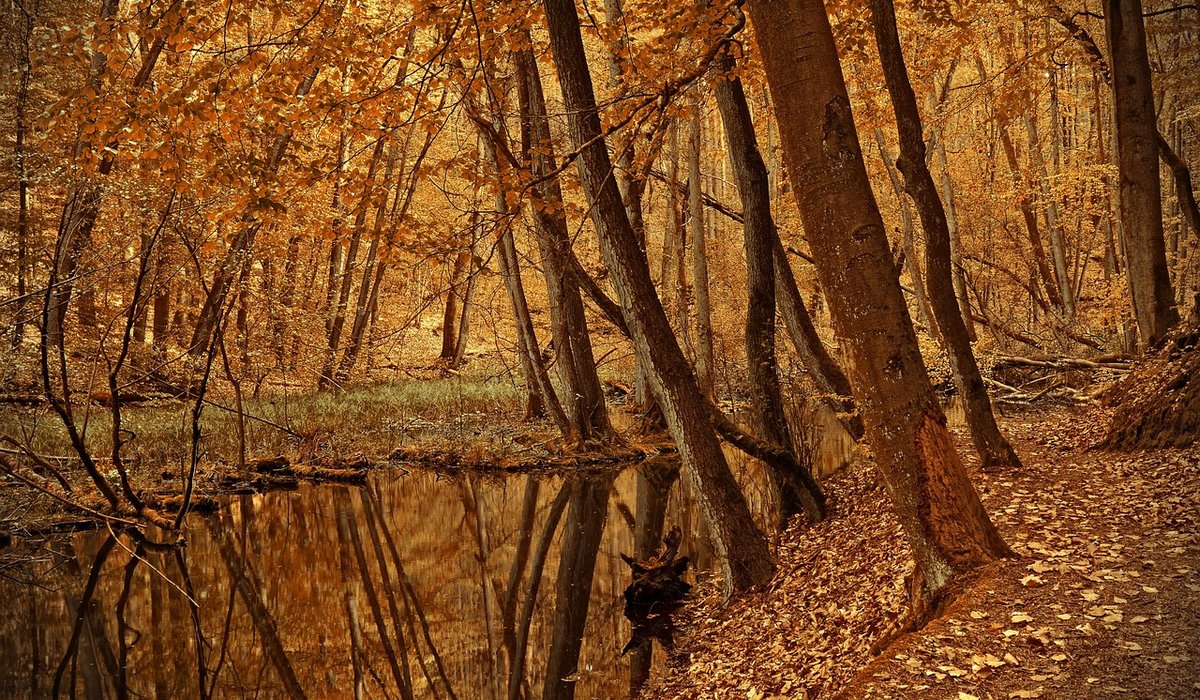
There is a moment in early March when the woodland still looks like winter — bare branches, grey light, the ground a mess of last year's leaves — and yet something has shifted. The first lesser celandine opens its glossy yellow stars along the verge, a chiffchaff starts up its two-note song from somewhere high, and the smell of the path changes. That is your cue to get out and walk.
Spring in Britain's woods is not a single event but a slow unrolling that runs from late February until the end of May. It also brings the worst ground conditions of the year. Frost comes out of the soil, rain keeps falling, and paths that were crisp underfoot in January turn into a slick of pale clay. Go prepared, go early in the day, and you will see far more than you would on a dry summer afternoon.
The order in which things appear is remarkably reliable, and learning it makes a walk much richer. Use it as a rough timetable, remembering that the south-west runs a week or two ahead of northern England and Scotland.
A wood that has been continuously wooded since at least 1600 — an ancient wood — will hold the greatest variety of these plants. If you see bluebells, wood anemone and dog's mercury together in broad drifts, you are almost certainly walking through one.
The dawn chorus peaks in the first two hours after sunrise, and it is worth the alarm clock at least once each spring. Listen for the descending scale of the willow warbler, the scratchy beginning of the blackcap, the drumming of great spotted woodpeckers, and the fluting notes of a song thrush repeating each phrase two or three times over.
This is also the season when every bush may hold a nest. From March through to the end of July, treat the whole wood as a nursery.
British woodland paths in spring are frequently ankle-deep, and the temptation is always to walk around the worst of the mud. Please do not. Widening a path by a metre or two each year strips the ground cover from the woodland floor and turns a single route into a braided mess.
Go through the mud, not around it. Waterproof boots with a deep tread, a pair of gaiters, and a spare pair of socks in the rucksack will see you through almost anything. Walking poles help on wet chalk and clay slopes, and a sit mat means you can rest without soaking your trousers. Check the weather and any local forestry notices before you set off — spring is a common time for felling and path closures.
Warmer days wake the ticks, and long grass is where they wait. Tuck trousers into socks, check yourself and your dog after every walk, and remove any tick promptly with fine tweezers or a tick tool. Watch for a spreading rash or flu-like symptoms in the following weeks, and speak to a doctor.
Adders bask on sunny woodland edges and clearings from March onwards. They are shy, and bites are rare, but give them plenty of room and never try to move one. Wherever you walk, assume livestock may be present: keep dogs on a lead around cattle and sheep, and always leave gates as you find them.
Take nothing but photographs. Digging up a wild plant is an offence in the UK, and picking bluebells does real damage — the leaves feed the bulb for next year's flower, so a picked stem costs more than it looks. Photograph them instead.
Go quietly, go early, and go often. A wood you visit weekly from March to May will show you something different every time: the day the canopy closes, the first swallow, the moment the anemones give way to the garlic. It is the best free entertainment in the British countryside, and it lasts about ten weeks.

Birchbulletin Real stories, useful guides and the occasional recommendation, all in one calm corner of the web.

Birchbulletin No rushing, no fuss — just thoughtful notes and practical help, written by people who care.

Learn to tell a blackbird from a song thrush by melody and repetition. Early morning walks are best for hearing woodland birds.

Comments
ALina Kelian
19th May 2018 ReplyBirchbulletin Simple, genuine and looked after with care — the kind of place worth returning to. ullamco laboris nisi ut aliquip ex ea commodo consequat.
Rlex Kelian
19th May 2018 ReplyBirchbulletin No rushing, no fuss — just thoughtful notes and practical help, written by people who care. ullamco laboris nisi ut aliquip commodo.
Roboto Alex
21th May 2018 ReplyBirchbulletin Real stories, useful guides and the occasional recommendation, all in one calm corner of the web. ullamco laboris nisi ut aliquip ex ea commodo consequat.