

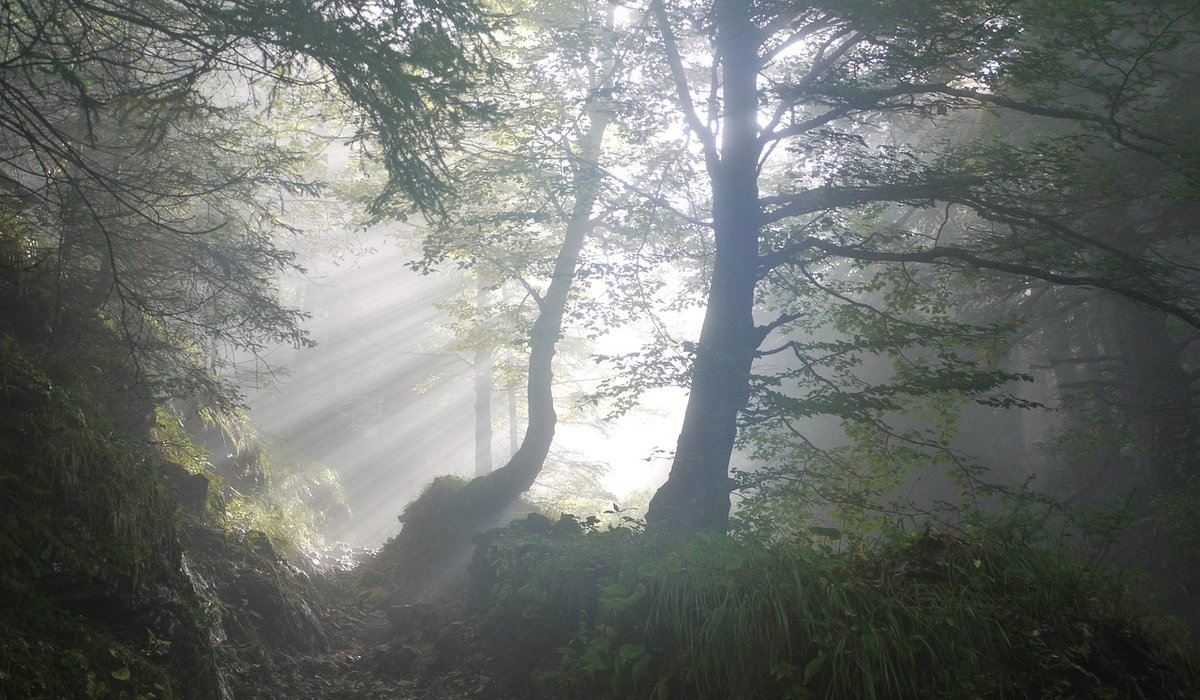
There is a moment in early autumn when the woodland shifts. The air turns cool and damp, the leaf litter darkens, and overnight the fruiting bodies of fungi push up through moss and rotting wood. What we call a mushroom is only the visible tip of an enormous, hidden network of threads called mycelium, which spreads through soil and timber all year round. The damp, mild days of September, October and November trigger these fruiting bodies to appear, and a walk after rain can be astonishingly productive.
Fungi are not plants. They cannot photosynthesise, so they feed instead on dead wood, fallen leaves and living roots. That is why they cluster around old stumps, along rotting branches and beneath particular trees. Learning to notice them adds a whole new layer to a countryside walk, even if you never pick a single one.
Before anything else: never eat a wild mushroom unless it has been confirmed by a qualified expert. Several of Britain's most poisonous species look maddeningly similar to edible ones, and mistakes can be fatal. The deathcap and the destroying angel are plain, pale and unremarkable, and both have caused deaths in the UK. No photograph, phone app or internet forum can substitute for hands-on identification by someone who genuinely knows the species.
Admiring and photographing fungi is entirely safe. If you do handle specimens, keep your hands away from your face and wash them afterwards, and supervise children and dogs closely.
The fly agaric is the fungus everyone recognises, and it is genuinely unmistakable: a scarlet cap dotted with white flecks, sitting on a white stem, usually beneath birch or pine. In spite of its storybook looks it is poisonous and should never be eaten. Older specimens fade to orange and the spots can wash off in heavy rain, so check the stem and the base carefully.
The amethyst deceiver is quieter but lovely — a small, vivid purple mushroom with widely spaced gills, common on beech leaf litter. The shaggy inkcap, growing in grassy verges and parkland, is another beginner's favourite: tall, white and shaggy, it dissolves into black ink within a day or two.
Not every fungus bothers with a stem. Bracket fungi grow straight out of standing and fallen timber, often in tiers that look like shelves or steps. The birch polypore is a rounded, grey-brown hoof shape with a white underside, most often found on birch trunks, and it is one of the most reliably identifiable species in the wood.
Look for jelly ear, a rubbery, brownish, ear-shaped fungus that grows on dead elder and other broadleaved branches; in wet weather it is soft and translucent, and in dry weather it hardens and shrinks. On the underside of logs you may find the beefsteak fungus, whose cut flesh really does resemble raw meat, with a reddish, velvety upper surface.
Puffballs are a gentle introduction to fungi because they have no gills to puzzle over. The common puffball is a pear-shaped, warty white ball, often clustered on woodland paths and mossy banks. The giant puffball can grow as large as a football, though finding one that size is a memorable event. If you are examining a puffball, cut it in half: a young specimen should be pure white and firm inside, like a marshmallow. If the interior has turned yellow, olive or purple, it is mature and must be left alone, because those spores are bitter and can cause stomach upset.
Earthstars are the puffball's stranger cousin. When damp, their outer layer splits into pointed rays that open flat on the ground like a star; when dry, the rays curl back inwards around the spore sac. They are easy to overlook among leaf litter and pine needles, so walk slowly and scan the ground a metre or two ahead.
Fungi are never random. The quickest way to improve your identification is to notice the tree above your head and the ground beneath your feet. Birch woodland favours fly agaric and birch polypore. Beech leaf litter suits amethyst deceivers and various brittlegills. Oak supports a huge range of species, including many boletes with spongy pores rather than gills. Damp hollows, mossy logs and the shaded edges of rides and clearings are consistently the richest spots.
Go out after rain, take your time, and carry a notebook to record where and when you found something. Even if you never eat a wild mushroom, learning the woodland's autumn cast is one of the most rewarding parts of a countryside walk.

Birchbulletin Real stories, useful guides and the occasional recommendation, all in one calm corner of the web.

Birchbulletin No rushing, no fuss — just thoughtful notes and practical help, written by people who care.

Hawthorn, blackthorn and field maple create a rich hedgerow. This habitat supports nesting birds, pollinators and small mammals throughout the year.

Comments
ALina Kelian
19th May 2018 ReplyBirchbulletin Simple, genuine and looked after with care — the kind of place worth returning to. ullamco laboris nisi ut aliquip ex ea commodo consequat.
Rlex Kelian
19th May 2018 ReplyBirchbulletin No rushing, no fuss — just thoughtful notes and practical help, written by people who care. ullamco laboris nisi ut aliquip commodo.
Roboto Alex
21th May 2018 ReplyBirchbulletin Real stories, useful guides and the occasional recommendation, all in one calm corner of the web. ullamco laboris nisi ut aliquip ex ea commodo consequat.